Introduction: Making the Festive Season Safe & Special for Your Pets
The festive season is a time of joy, celebration, and sharing special moments with family. For any dedicated pet parent, our pets are cherished family members, and the temptation to include them in the festive feast is strong. As you prepare a delicious Christmas Dinner, those hopeful eyes staring up from the floor can be hard to resist. However, many popular Christmas foods are dangerous for our furry companions. This guide will show you how to keep them safe while including them in the celebration.
The Magic of Christmas: Including Your Canine & Feline Friends
Including your pets in the festivities strengthens your bond and makes Christmas complete. The magic isn’t about giving them a full plate, it’s about providing safe, special treats. By preparing a pet-friendly version of a festive meal, you can share the joy without the risk.
Why Pet Food Safety Matters: Avoiding Emergency Vet Visits
The holidays are notoriously busy for vets. Emergency visits spike during Christmas because pets accidentally eat harmful foods. Many common Christmas ingredients are toxic to dogs and cats, while rich, fatty food causes severe digestive issues like pancreatitis. Knowing what’s safe is the best gift you can give your pet this year.
The Golden Rule: Plain, Cooked, Unseasoned Only
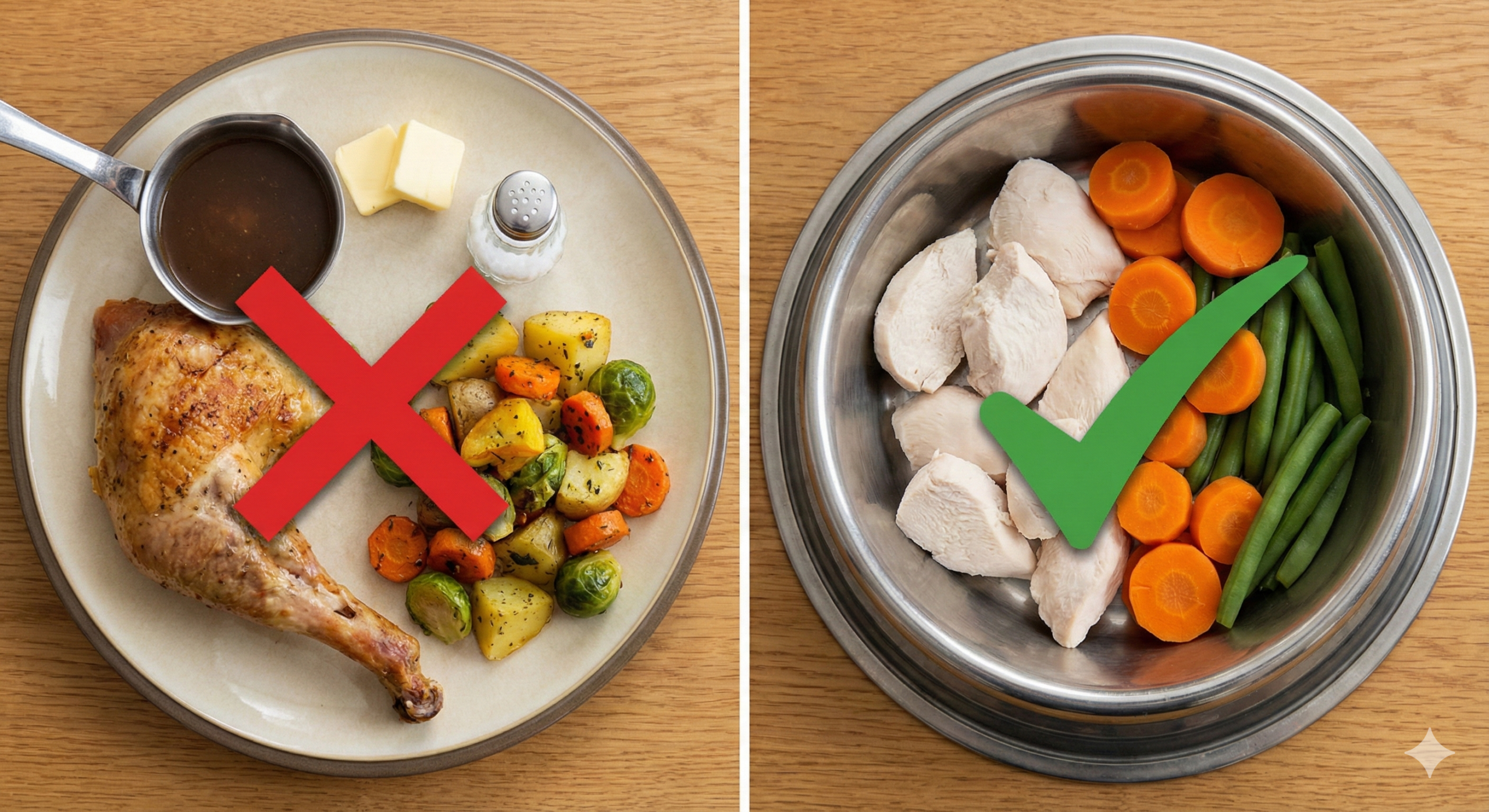
Simple is safe. When preparing any food for your pet, meat or vegetables it must be completely plain:
- No salt, butter, oils, or spices
- No seasonings common in human cooking
- No onions or garlic (hidden in gravy, stuffing, stock)
A pet’s digestive system is far more sensitive than ours. Ingredients we consider flavourful can be harmful to them.
Why Cooking Methods Matter
Fried or roasted foods cooked with oils and butter are too rich. The safest methods are boiling, steaming, or baking without additives. This keeps food easy to digest and free from harmful extras.
The 10% Rule: Moderation Matters
Holiday treats should make up no more than 10% of your pet’s daily calories. A few small bites make them feel included without disrupting their balanced diet.
Portion guidelines:
- Small dogs (under 10kg): 1-2 tablespoons max
- Medium dogs (10-25kg): 2-4 tablespoons max
- Large dogs (over 25kg): 4-6 tablespoons max
- All cats: 1-2 teaspoons max
Safe & Festive Options for Your Dog’s Christmas Dinner
Lean Meats: The Heart of a Dog-Safe Meal
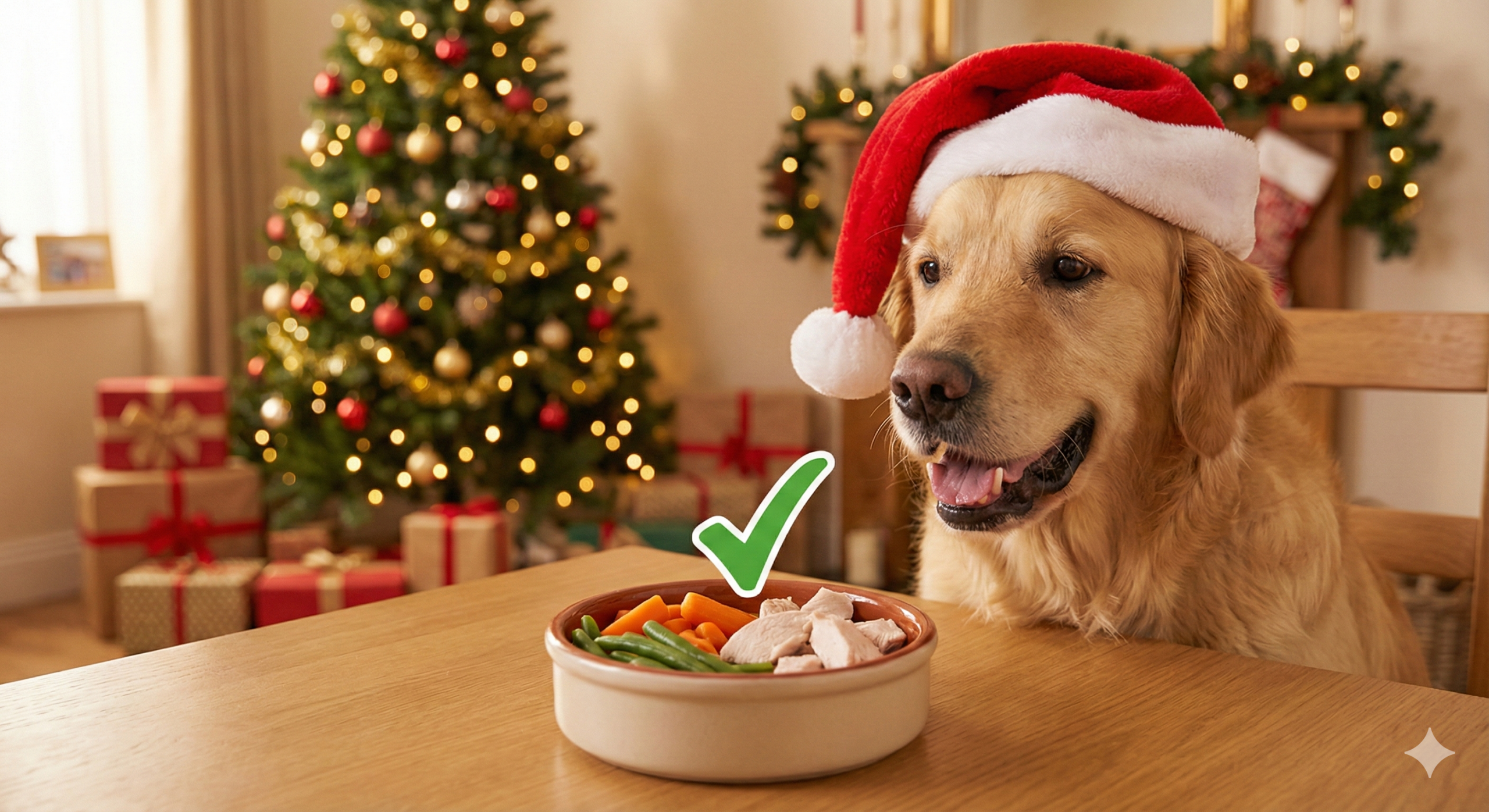
Turkey: Skinless, boneless breast meat only. Completely plain no seasoning or gravy. Avoid dark meat and skin (too fatty).
Other meats: Plain chicken or lean, trimmed beef. Remove all bones and excess fat.
Wholesome Vegetables
- Carrots: Cooked or raw, great source of vitamins
- Green Beans: Steamed or boiled, low-calorie, high-fibre
- Brussels Sprouts: Plain and cooked (warning: may cause gas!)
- Peas: Plain, vitamin-packed
- Parsnips & Swede: Small amounts, cooked and plain
- Sweet Potatoes & Potatoes: Plain mashed (no butter, salt, or cream)
Other Safe Bites
- Cranberries: Small amount of plain, unsweetened (avoid alcohol or xylitol)
- Pumpkin: Plain puree only (not pie filling)…..aids digestion
- Scrambled egg: Plain, excellent protein
- Apples: Remove seeds and core (contain cyanide), fresh only
Creative Dog-Friendly Christmas Dinner
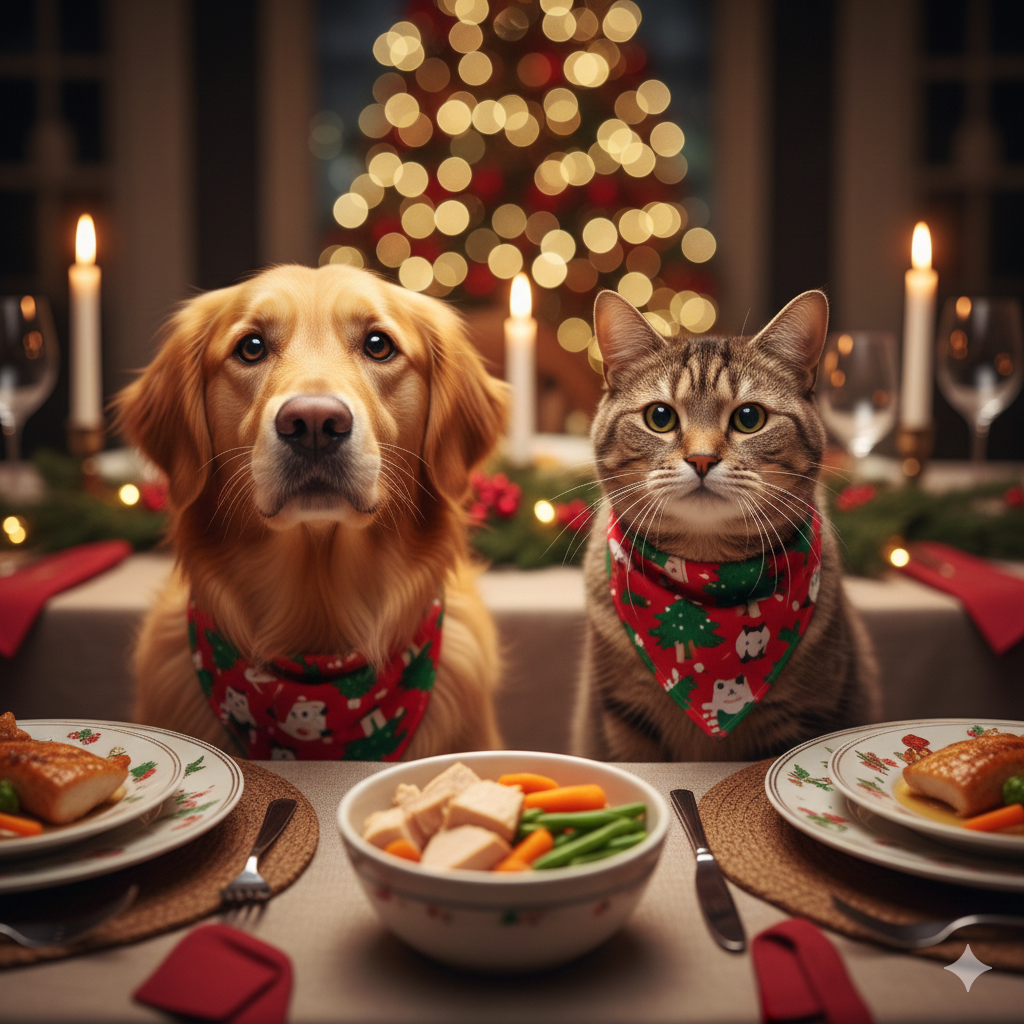
Mix small shredded pieces of plain turkey breast with a spoonful of mashed carrots or sweet potato. Top with chopped green beans. Serve as a small topper on their regular food.
Safe & Festive Options for Your Cat’s Christmas Dinner
Cats are obligate carnivores, their diet centres almost exclusively on meat. Keep it simple and protein-rich.
Protein-Rich Delights
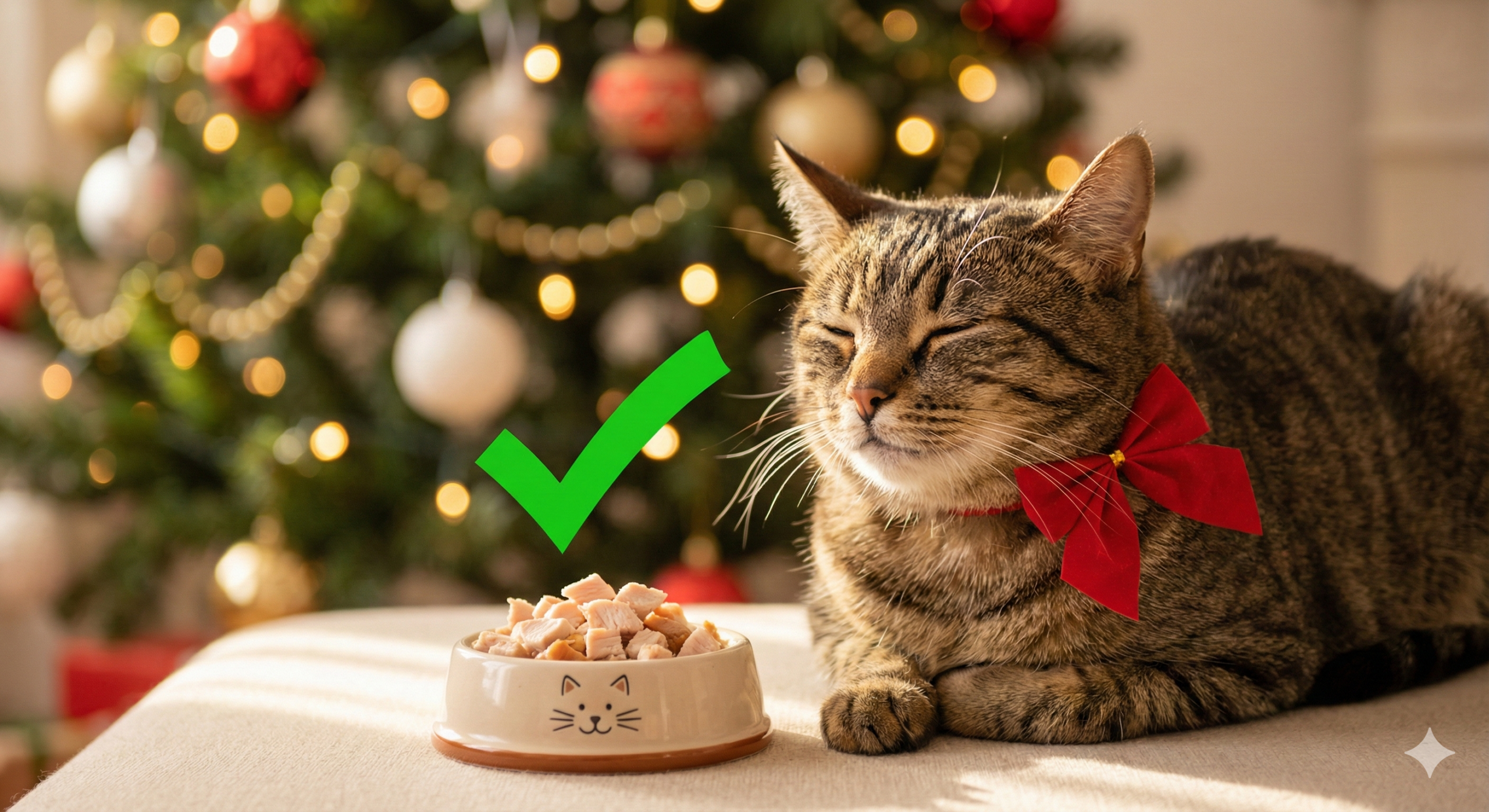
- Turkey or chicken: Small flakes, boneless, skinless, unseasoned
- Fish: Tiny piece of plain cooked salmon or tuna (spring water, not brine)
- Always check for small bones (choking hazard)
Skip the Veggies
Most cats aren’t interested in vegetables, and their digestive systems can’t handle them well. Stick to meat.
Festive Toppers
The best treat is a few morsels of plain, cooked meat. Avoid dairy, most adult cats are lactose intolerant. For flavour, add a drop of plain, unseasoned water used to boil turkey or chicken as a tasty “broth
The Naughty List: Toxic & Dangerous Christmas Foods
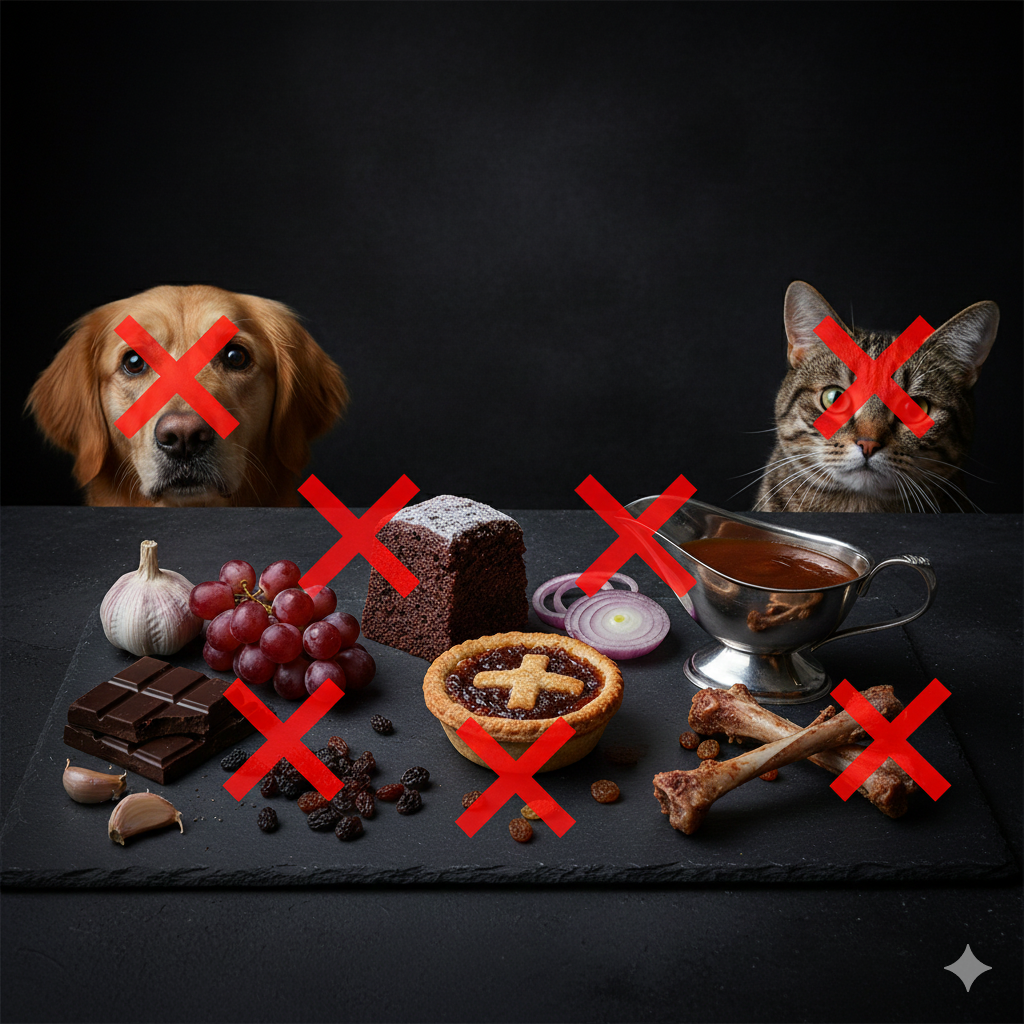
Never feed your pet these foods. They can cause serious illness, emergency vet visits, or death.
Toxic Ingredients
Onions, garlic, leeks, chives: Damage red blood cells, cause anaemia. Found in stuffing, gravy, prepared dishes.
Chocolate: Contains theobromine that can cause vomiting, seizures, heart failure. Dark chocolate and baking chocolate are most dangerous. Even 25g of dark chocolate can harm a 10kg dog.
Grapes, raisins, sultanas: Cause acute kidney failure. Even one grape can be fatal. This means no Christmas pudding, mince pies, or fruitcake.
Macadamia nuts: Cause weakness, vomiting, tremors, hyperthermia.
Xylitol: Artificial sweetener this extremely toxic. Causes rapid insulin release, hypoglycemia, seizures, liver failure. Found in sugar-free sweets, baked goods, some peanut butters.
Alcohol: Causes intoxication, respiratory failure, death. Found in Christmas pudding, trifle, brandy butter.
Nutmeg: Found in eggnog, spiced desserts. Causes disorientation, increased heart rate, seizures.
High-Fat & Rich Foods: Pancreatitis Risk
Gravy and turkey skin: Loaded with fat and salt that can trigger pancreatitis (painful, potentially fatal).
Ham and bacon: Extremely high sodium and fat. Can cause pancreatitis, sodium poisoning.
Stuffing and sausages: High fat, salt, often contain onions or garlic.
Rich desserts and cream: Cause vomiting, diarrhoea, severe digestive issues.
Dairy products: Most pets are lactose intolerant. So this can cause stomach upset.
Physical Hazards
Cooked bones: Become brittle, splinter easily. Serious choking hazard, can perforate stomach or intestines. Never give cooked bones.
Corn on the cob: Not digestible. Causes intestinal blockage requiring surgery.
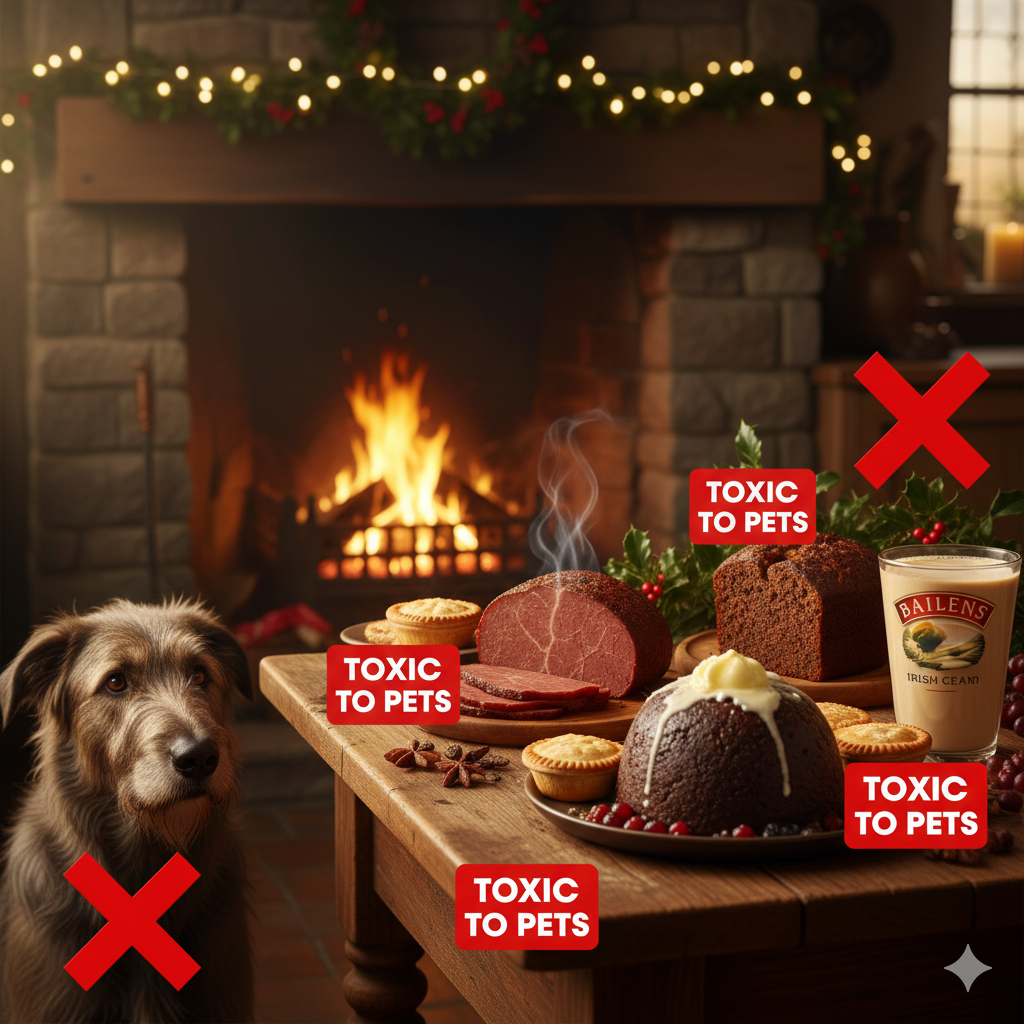
Irish Christmas Foods: Keep These Away from Pets
Traditional Irish Christmas dishes pose specific dangers:
Christmas Pudding: Contains raisins, currants, alcohol, nutmeg. All toxic. Never give to pets.
Mince Pies: Contain raisins and suet (too fatty). Even a small amount causes kidney failure.
Spiced Beef: Traditional Irish dish heavily seasoned with spices and salt. The spice mix often includes toxic ingredients.
Porter Cake: Contains raisins and alcohol (stout)…..both toxic.
Baileys and Irish Cream: Contains alcohol and dairy. Never allow pets to lick plates or glasses.
Proactive Strategies for a Stress-Free Holiday
Prevention is always better than cure.
Prevent Accidental Ingestion
- Keep food waste bin securely closed
- Don’t leave food unattended on low tables
- Ensure guests (especially children) don’t feed pets from their plates
- Secure kitchen cupboards during cooking chaos
Prepare Dedicated Pet-Friendly Treats
Set aside plain turkey and vegetables before adding seasonings. Having their special, safe treats ready means you won’t be tempted to share unsafe food from the table.
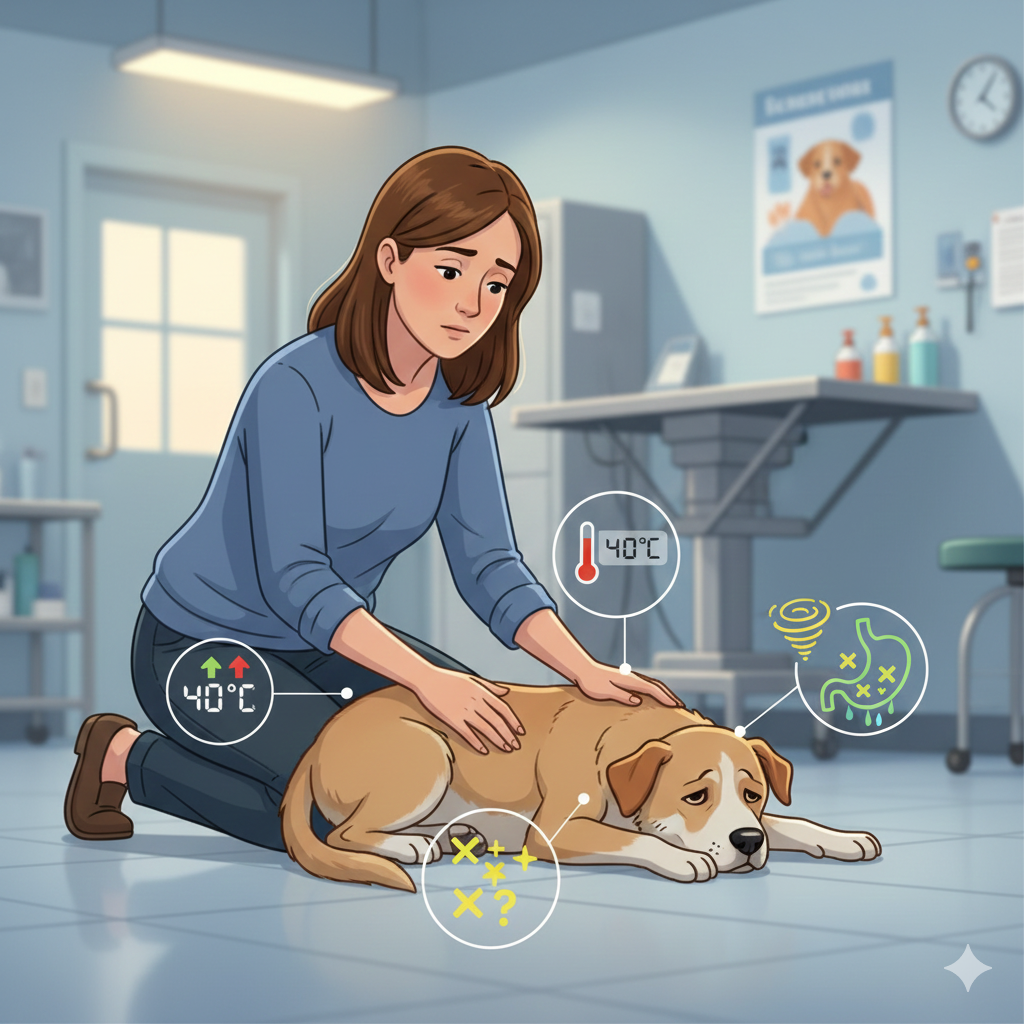
Emergency Action Plan: If Your Pet Eats Something Unsafe
Act immediately if you suspect poisoning.
- Stay calm: Panicking won’t help
- Gather evidence: Note what they ate, how much, and when
- Call your vet immediately: Don’t wait for symptoms
- Don’t induce vomiting unless instructed by a vet
Emergency Warning Signs
Call vet immediately:
- Difficulty breathing
- Seizures or tremors
- Collapse or inability to stand
- Severe vomiting or diarrhoea
- Bloody stools
- Extreme lethargy
- Pale gums
- Rapid or irregular heartbeat
Call vet within hours:
- Repeated vomiting
- Loss of appetite
- Excessive drooling
- Abdominal pain (hunched posture)
- Excessive thirst or urination
- Disorientation
Keep your local emergency vet number saved in your phone.
Conclusion: Wishing You and Your Furry Family a Safe and Happy Christmas!
The festive season is about creating cherished memories with the ones we love and that includes our pets. By understanding the risks, knowing which foods are safe, and planning ahead, you ensure your dog or cat is a happy, healthy part of your Christmas celebration.
Key Takeaways:
- Plain, unseasoned meat (turkey, chicken, beef) is safe in small amounts
- Plain vegetables (carrots, green beans, peas) are safe options
- Never share foods containing onions, garlic, grapes, raisins, chocolate, or xylitol
- Cooked bones are always dangerous
- Fatty, salty, seasoned foods cause digestive issues
- Keep emergency vet numbers accessible
- When in doubt, don’t share it
Being a proactive and informed pet parent is the key to a joyful holiday for everyone. Have a safe and happy Christmas!