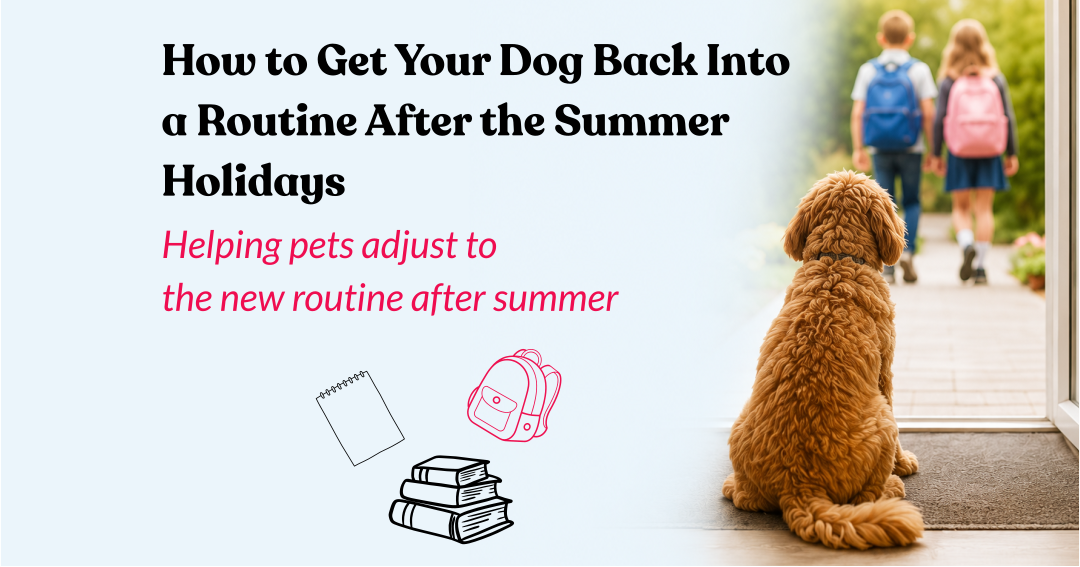
It’s time to start thinking about getting yourself & your dog back into a routine before the school term starts at the end of the month. Summer’s nearly over. The house is about to get a lot quieter, a lot faster than your dog is expecting.
For three months, your dog has had company. Kids around all day, walks whenever it suited, someone home for the mid-morning check-in. That’s about to change, and it changes fast — not gradually, the way dogs prefer.
The good news: this is completely manageable. It just needs a plan, and that plan works best if you start it before the first school bell, not on the morning of.
The School Run: Resetting Your Dog’s Day
Dogs run on routine, not on calendars. They don’t know it’s almost September. They just notice that breakfast is late, the walk didn’t happen, and everyone left the house at once.
Start adjusting a few days before school actually starts — not on day one. Day one is hard enough for the kids. Don’t make it your dog’s hardest day too.
Here’s what to shift, gradually:
- Walk timing. If summer walks were at 11am and term-time walks need to be at 7:30am, move the time earlier by 20–30 minutes each day this week.
- Feeding schedule. Feeding times should match the new routine before the new routine actually starts. A dog fed on a shifting schedule gets an unsettled stomach and an unsettled temperament.
- Mid-morning gap. If someone was always home mid-morning over summer and won’t be once school’s back, start practising that gap now, in short stretches, rather than all at once on the first school day.
The aim is simple: by the time school actually starts, your dog’s day already looks like term-time. Nothing new to adjust to except the actual quiet house.
Being Left Alone Again
This is the part people underestimate.
A dog that’s had constant company for three months isn’t being dramatic if a full day alone feels hard. It’s a genuine adjustment — for puppies who’ve never experienced it, for rescues who arrived during a quieter stretch, and for older dogs who’ve simply gotten used to a full house.
We hear this from customers every year, and it’s not just a dog problem. As one dog owner put it, describing the same dread from the other direction: “My senior is 13 and we’ve never left her alone for a full day in three years. The RTO order has me up at night.” That’s a person talking about their own routine change — but it’s exactly the anxiety dogs feel too, and exactly why this deserves proper attention rather than being left to sort itself out.
Practise short absences before term starts. Leave for 10 minutes. Then 30. Then an hour. Build it up over the week before school goes back, so the first full school day isn’t the first time your dog has been alone in months.
Keep departures and arrivals boring. No big goodbyes, no excited hellos. The calmer you are leaving and coming home, the calmer your dog learns to be about the whole thing.
Know the difference between adjustment and a real problem. A bit of whining at the door, or settling slowly for the first few minutes, is normal. Destructive chewing, prolonged howling or barking, or house-soiling in a dog that’s otherwise fully trained — that’s not normal adjustment. That’s separation anxiety, and it’s worth taking seriously.
If you’re seeing those signs, our full guide on preventing and treating separation anxiety covers it in depth — including when it’s time to bring in a vet or trainer. Don’t wait months on it. Early support makes it far easier to resolve.
Being Left Alone Again
This is the part people underestimate.
A dog that’s had constant company for three months isn’t being dramatic if a full day alone feels hard. It’s a genuine adjustment — for puppies who’ve never experienced it, for rescues who arrived during a quieter stretch, and for older dogs who’ve simply gotten used to a full house.
Practise short absences before term starts.
Leave for 10 minutes. Then 30. Then an hour. Build it up over the week before school goes back, so the first full school day isn’t the first time your dog has been alone in months.
Keep departures and arrivals boring.
No big goodbyes, no excited hellos. The calmer you are leaving and coming home, the calmer your dog learns to be about the whole thing.
Know the difference between adjustment and a real problem.
A bit of whining at the door, or settling slowly for the first few minutes, is normal. Destructive chewing, prolonged howling or barking, or house-soiling in a dog that’s otherwise fully trained — that’s not normal adjustment. That’s separation anxiety, and it’s worth taking seriously.
If you’re seeing those signs, our full guide on preventing and treating separation anxiety covers it in depth — including when it’s time to bring in a vet or trainer. Don’t wait months on it. Early support makes it far easier to resolve.