You get up to make a cup of tea. Your dog gets up too.
You go to the bathroom. There’s a nose under the door.
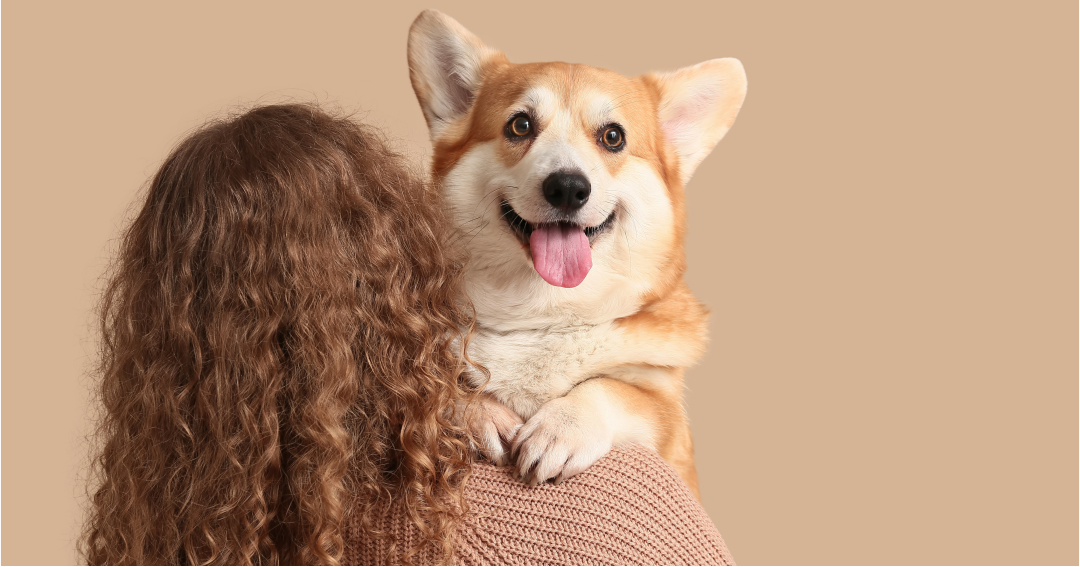
If that sounds familiar, you’ve got a velcro dog. It’s a real term, not just a bit of internet slang — and it describes something specific: a dog who sticks close to their person, follows room to room, and actively seeks out physical or visual contact rather than just happening to be nearby. Some dogs are wired for it. Others learn it. Either way, it’s one of the most common things we hear about from customers in the shop, usually said half-exasperated, half-delighted: “he won’t leave my side.”
Let’s get into what’s actually going on — and the one distinction that matters far more than most people realise.
Which Breeds Are the Classic Velcro Dog Breeds
Some breeds are velcro by design, not by accident.
The Vizsla
the poster child. Hungarian gundogs bred for falconry and close-range fieldwork, Vizslas were never asked to work at a distance from their handler — closeness was the job. That heritage hasn’t gone anywhere. Vizsla owners have a nickname for the breed: “the heartbreak dog,” because they attach so completely.
Labradors
Bred as retrieving gundogs for waterfowl — a role built entirely on tight teamwork with a handler. That’s why a modern Lab wants to be involved in absolutely everything happening in the house, from doing the washing-up to answering the front door.
German Shepherds
Are working and protection dogs, bred to keep their flock in sight and under watch. Give a GSD a house instead of a flock, and they’ll patrol it — which is exactly why they’re famous for tracking their person from room to room.
Doberman Pinschers
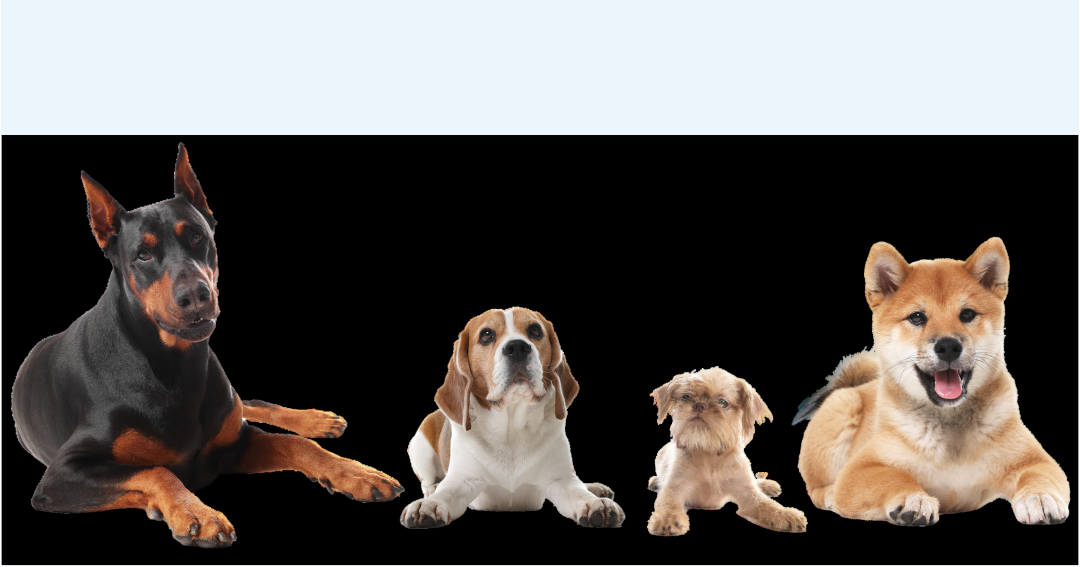
Purpose-built for personal protection in Germany. For a Dobermann, shadowing you isn’t just affection — it’s instinct doing its job.
Border Collies
Herd through intense eye contact and constant repositioning relative to livestock. No sheep in the sitting room? That same instinct redirects onto you.
Golden Retrievers
Combine gundog work ethic with a temperament built to please people, which is a fairly reliable recipe for velcro behaviour.
Then there’s a completely different category: Cavalier King Charles Spaniels, Chihuahuas, Maltese, Italian Greyhounds, Papillons. These weren’t bred to do a job at all. The Cavalier was developed purely as a lapdog for royalty — for King Charles II specifically. Closeness wasn’t a side effect of their work. It was the entire brief.
When Following You Everywhere Becomes a Problem
Normal velcro behaviour looks like this: your dog follows you room to room, maybe gives a short whine when you close the bathroom door, then settles down and gets on with things.
That’s not a problem. That’s a dog who likes you.
Pay attention if you start seeing any of the following instead:
- Destructive behaviour — chewing doors, furniture, or skirting boards
- House soiling in a dog that’s otherwise fully house-trained
- Prolonged howling or barking specifically when left alone
- Pacing, drooling, or heavy panting before or during your absence
- Loss of appetite, or in extreme cases, self-harm
A dog who suddenly turns velcro when they never were before — after a house move, a bereavement, or a change in routine — is also worth taking seriously. That’s a signal, not a coincidence. If any of this sounds like your dog, our full guide on preventing and treating separation anxiety covers it properly.
Can You Train a Velcro Dog to Be Happy Alone?
Yes — but the goal isn’t to switch off the attachment. It’s to build the capacity to cope without it, in stages.
- Gradual absence training. Short spells alone first, building duration incrementally. Don’t jump from “never alone” to “gone all day.”
- Teach a settle cue. Reward your dog for lying on a bed or mat away from you while you’re still in the room, so proximity isn’t the only route to feeling secure.
- Decouple departure cues. Pick up your keys, put on your shoes — without leaving. Do it enough times and those cues stop meaning “abandonment.”
- Keep hellos and goodbyes boring. No big emotional send-offs. That just confirms to the dog that leaving is a big deal.
- Give them a job for when you’re gone. A frozen Lickimat, a stuffed KONG, or a snuffle mat turns alone-time into something to solve rather than something to endure.
- Crate training done properly — as a den, never a punishment — gives some velcro dogs a secure base of their own, which reduces the urge to physically track you around the house. A calming bed like our Beddies calming bed inside the crate helps that association along.
This is a slow build, not a switch you flip. If you’re heading back into a routine after time off together — post-holidays, post-lockdown, whatever the trigger was — our piece on getting your dog back into a routine walks through exactly this.
The bottom line: a velcro dog is not a broken dog. It’s a dog doing what generations of breeding told it to do, or simply doing what companion breeds have always done. Watch for the difference between wanting you there and falling apart when you’re not — that’s the whole diagnosis. Everything else is training, patience, and the right tools for the job.