“Twenty to thirty minutes, twice a day” gets thrown around a lot. It’s not wrong, exactly. It’s just not enough of an answer.
You can have 2 different breeds, both in the “medium-to-large, decent-sized dog” bracket. Put them side by side and one will happily plod round the block twice a day while the other will start eating the skirting boards if it doesn’t get a proper run. Same rough size. Completely different needs.
That’s because exercise need isn’t really about size. It’s about what the breed was bred to do. Size gives you a starting range. Breed purpose tells you whether that range is close to right or wildly off. Below, we’ll give you real numbers to work from, then explain the nuance that actually matters for your dog.
If you’ve got a puppy rather than an adult dog, this isn’t the post for you — overexercising a growing pup carries its own joint risks, and we’ve covered that separately in how much exercise should I give my puppy? This piece is about adult dogs.
Exercise Needs By Size
Small breeds (roughly under 10kg)
Think Chihuahua, Cavalier King Charles Spaniel, French Bulldog, Yorkshire Terrier, Dachshund.
Most of these do fine on 30 to 60 minutes a day, often split into two shorter walks. Small legs, small strides, less ground covered per minute.
But — and this matters — some small breeds buck this completely. A Jack Russell is small. A Jack Russell is not a 30-minute dog. More on that below.
Medium breeds (roughly 10-25kg)
Cocker Spaniel, Springer Spaniel, Beagle, Border Collie, Staffordshire Bull Terrier.
1 to 2 hours a day is the realistic range here. But this bracket hides the biggest gap in the whole list. A Staffie and a Border Collie are both “medium” dogs, and a Border Collie bred for herding work will run circles round a Staffie’s exercise needs, both physically and mentally. “Medium” describes their weight, not their drive.
Large breeds (25kg+)
Labrador Retriever, German Shepherd, Golden Retriever, Boxer, Siberian Husky, Bernese Mountain Dog, Great Dane.
Typical range is 1 to 2 hours a day — but this is the bracket where size misleads you most. A German Shepherd or working-line Labrador at the top of that range will still have energy left. A giant breed like a Bernese Mountain Dog or Great Dane often needs considerably less, and what it does need should be lower-impact — think steady walking over uneven sprinting, especially while the dog is still growing, when heavy exercise puts real strain on developing joints and bones.
Bigger dog does not automatically mean bigger exercise requirement. Sometimes it means the opposite.
Why Some Breeds Need More Than Others
This is the part worth actually understanding, because it’s what the size chart above can’t tell you.
Working and herding breeds
Border Collies, German Shepherds, Kelpie-types — were bred to work livestock or people all day, using their brain as much as their legs. Give one of these a walk and nothing else, and it will find its own job. Usually that job involves your furniture, your bins, or the neighbour’s cat. These dogs need real physical output plus mental work — training, scent games, problem-solving — or they self-employ, and you won’t like what they choose.
Terriers bred for vermin and hunting
Jack Russell, Patterdale — are small dogs with a job that never switched off. They were built to dig, chase, and go all day underground after things that fight back. Size tells you nothing about their stamina. These dogs routinely need more exercise than breeds twice their weight.
Gun dogs and working spaniels
Springer Spaniels, working-line Cocker Spaniels — were bred to work fields for hours at a time. Worth knowing: there’s a real difference between a working-line Cocker and a pet-line Cocker from the same breed. The working line tends to be considerably higher energy. If you’re choosing a dog, or trying to work out why your current one won’t settle, the line matters as much as the breed name on the paper.
Sighthounds
Greyhound, Whippet, Lurcher — are built for short, explosive sprints, not hours of steady plodding. A Greyhound is, famously, one of the laziest dogs you can own for 22 hours of the day. Give it 10 minutes of proper off-lead sprinting somewhere safe and it’s often done.
Brachycephalic breeds
French Bulldog, Bulldog, Pug — aren’t limited by size. They’re limited by airway structure and heat tolerance. Even a breed with plenty of stated energy needs short, cool walks, kept well away from midday heat, regardless of what the general breed profile says.
Giant companion breeds
Bernese Mountain Dog, Newfoundland, Great Dane — are often surprisingly low-drive despite their size, and overexercising them, particularly as puppies and young adults, is a genuine risk to developing joints.
The straight takeaway: size-based rules are a starting point, not an answer. Research your own dog’s specific breed — and if you’ve a mixed breed, look at the dominant traits — rather than assuming “medium dog, medium exercise.” If you’re unsure, a vet or a reputable breed-specific resource will give you a straighter answer than guessing from weight alone.
When Hours Of Walking Isn’t Possible
Some days the hour-long walk just isn’t happening. Work runs long, weather’s foul, you’re wrecked. That’s fine — physical walking isn’t the only way to meet a dog’s needs.
Fifteen minutes of real mental work can tire a dog out faster than an hour of plodding on-lead. Short training sessions, scatter feeding, puzzle feeders, lick mats, or a few minutes of flirt-pole or fetch in the garden all do genuine work a walk doesn’t.
For high-drive breeds — working Collies, working-line spaniels, terriers — this matters even more on the days a proper walk isn’t possible. A dog walker or a session at doggy daycare can fill the gap that enrichment alone can’t.
We’ve written a full guide to enrichment and boredom-busting separately — it’s worth reading properly rather than us repeating it here: helping your dog deal with boredom. If you haven’t tried a snuffle mat, it’s one of the simpler ways to turn dinner into 15 minutes of proper mental effort — more on those here.
Does Every Walk Give The Same Benefit?
No. A 40-minute off-lead beach walk and a 40-minute on-lead walk round the estate are not the same thing, even though they’re the same length.
Off-lead walks
beach, field, anywhere safe and legal — let a dog use its nose properly. Free sniffing is genuine cognitive work, sometimes called a “sniffari,” and it’s mentally tiring in a way a straight pavement walk isn’t. Uneven ground like sand or field also demands more physical effort per minute than flat concrete. The dog sets its own pace. That’s real decompression.
On-lead pavement walks
are essential — for road safety, for dogs still working on recall, for reactive dogs, for anywhere off-lead simply isn’t safe. But they’re more repetitive, less enriching, and if the dog pulls flat-out the whole way, it stops being restorative for either end of the lead. A dog hauling against a flat collar for 40 minutes straight isn’t relaxed, and constant pulling puts real strain on the neck and throat.
This is exactly where the right gear changes the walk. A properly fitted Halti head collar redirects a pulling dog’s head gently, without force, and turns a stressful trudge back into something closer to a loose, engaged walk. Sizing matters here — Halti head collars run sizes 0-5 for different muzzle lengths, so it’s worth measuring rather than guessing. If a head collar isn’t the right fit for your dog, the Halti Walk Premium Comfort No Pull Control Collar is a solid alternative.
The practical verdict: vary the type of walk where you can, not just the length. A mix of off-lead decompression time and structured on-lead walks covers more of what your dog actually needs than either one on repeat.


Gear That Makes The Walk Itself Better
A few things worth having in the boot or by the front door, each solving a specific problem raised above.
What to take?
For the puller: a Halti head collar, sized correctly, paired with training treats — something like Carnilove soft treats or Coachi Puppy Training Treats — to reward the moments the lead goes slack. The two together retrain loose-lead walking far faster than either on its own, and the same treats double up for the short training sessions that fill the gap on busy days.
For every walk, on-lead or off: poo bags, always in the pocket. The Woolly Wolf Sea to Summit poop bag holder matches the rest of the range if you’re kitting a dog out properly.
What to wear?
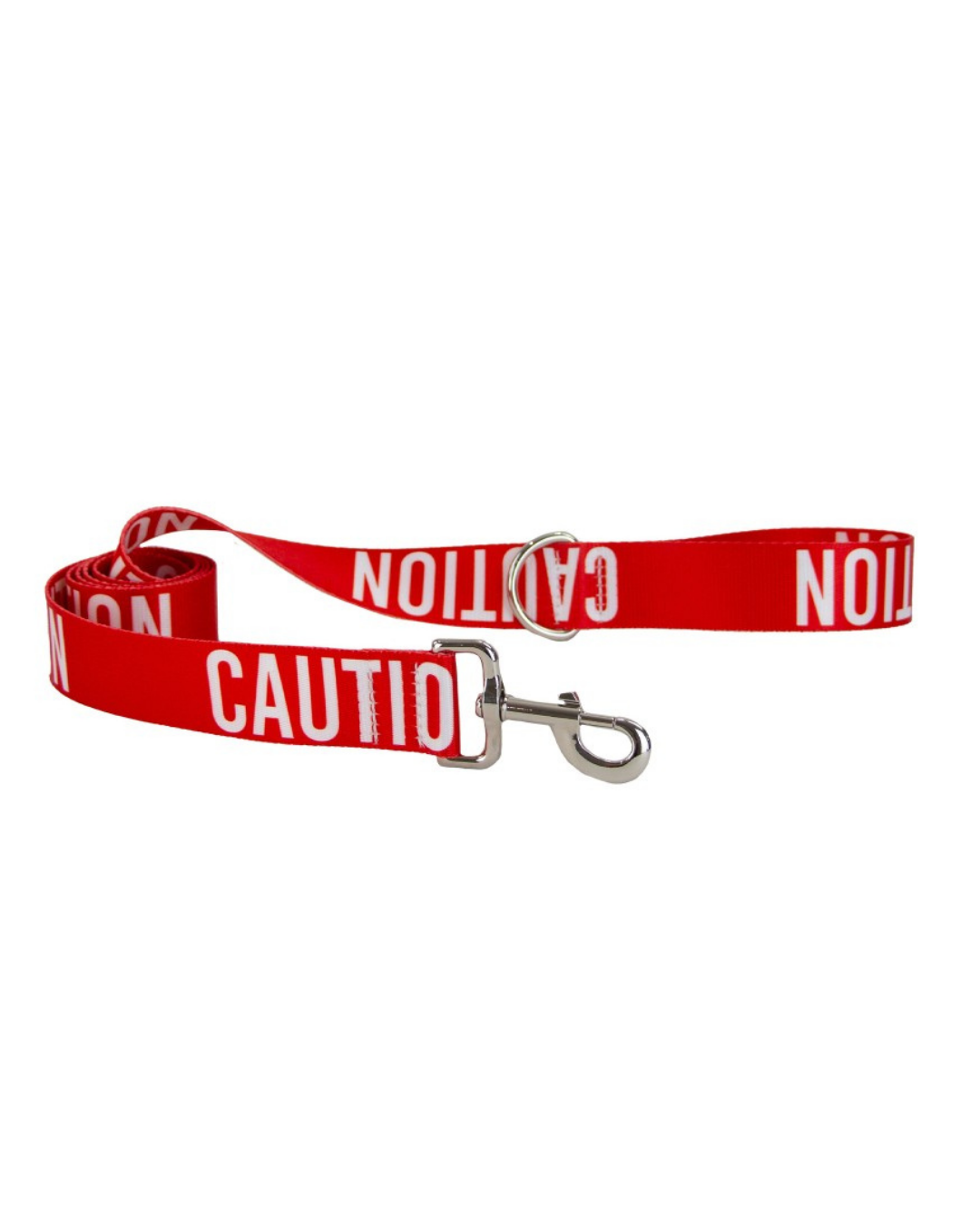
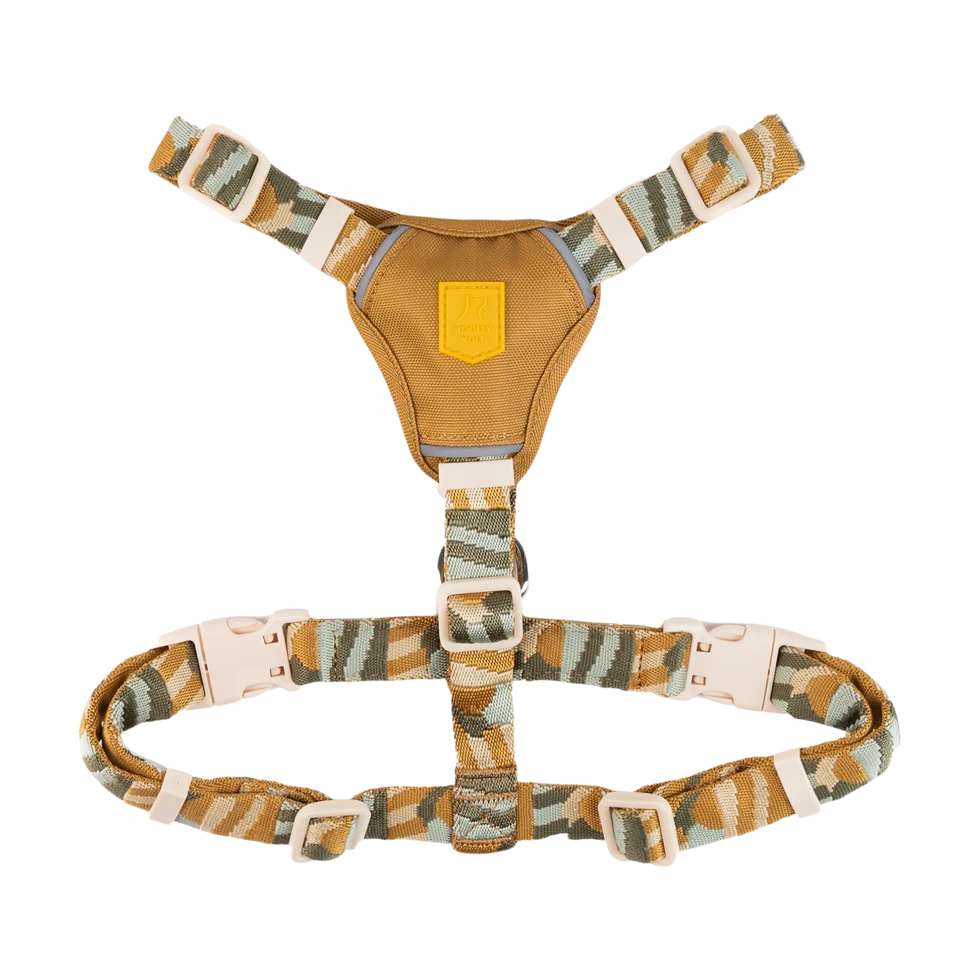
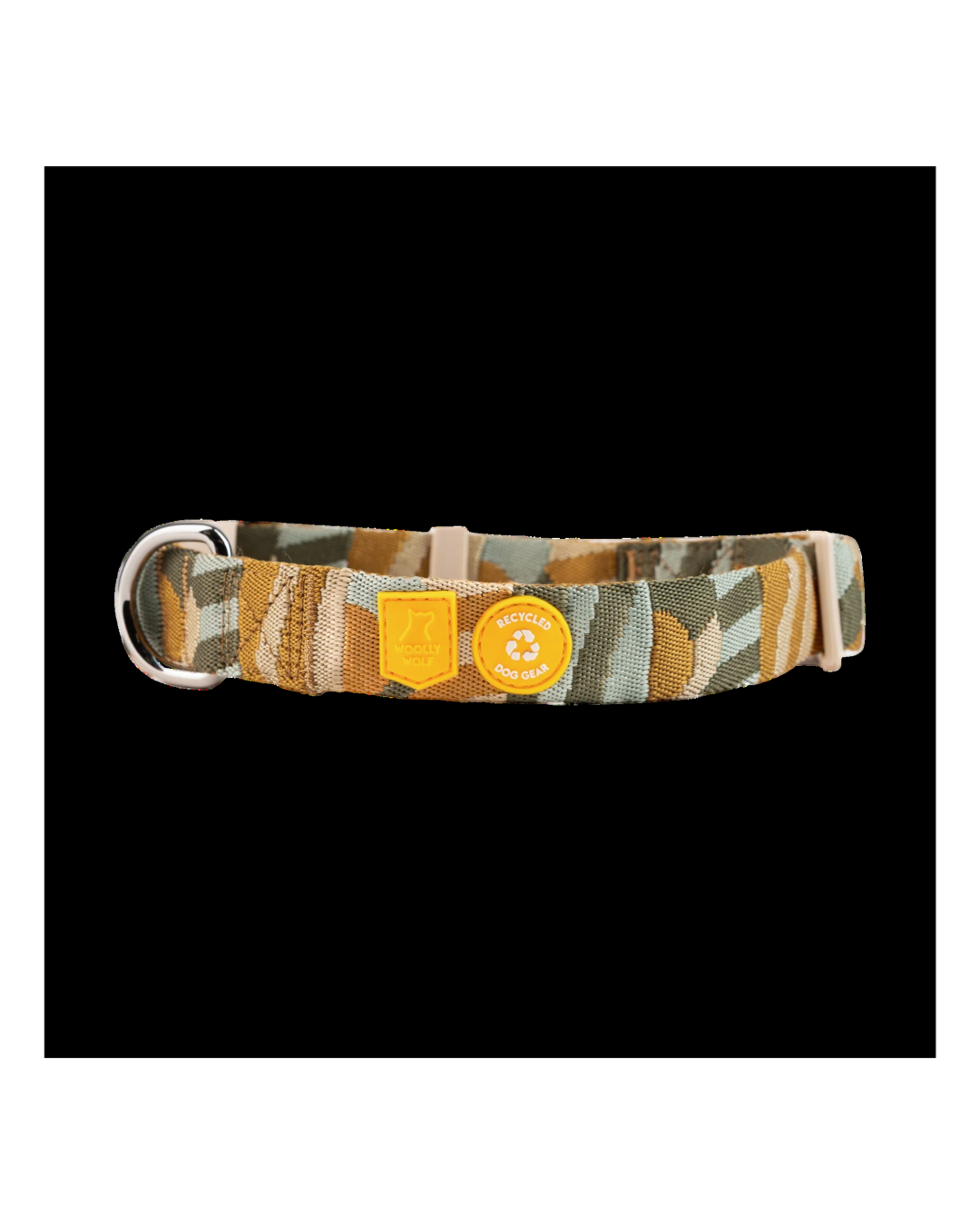
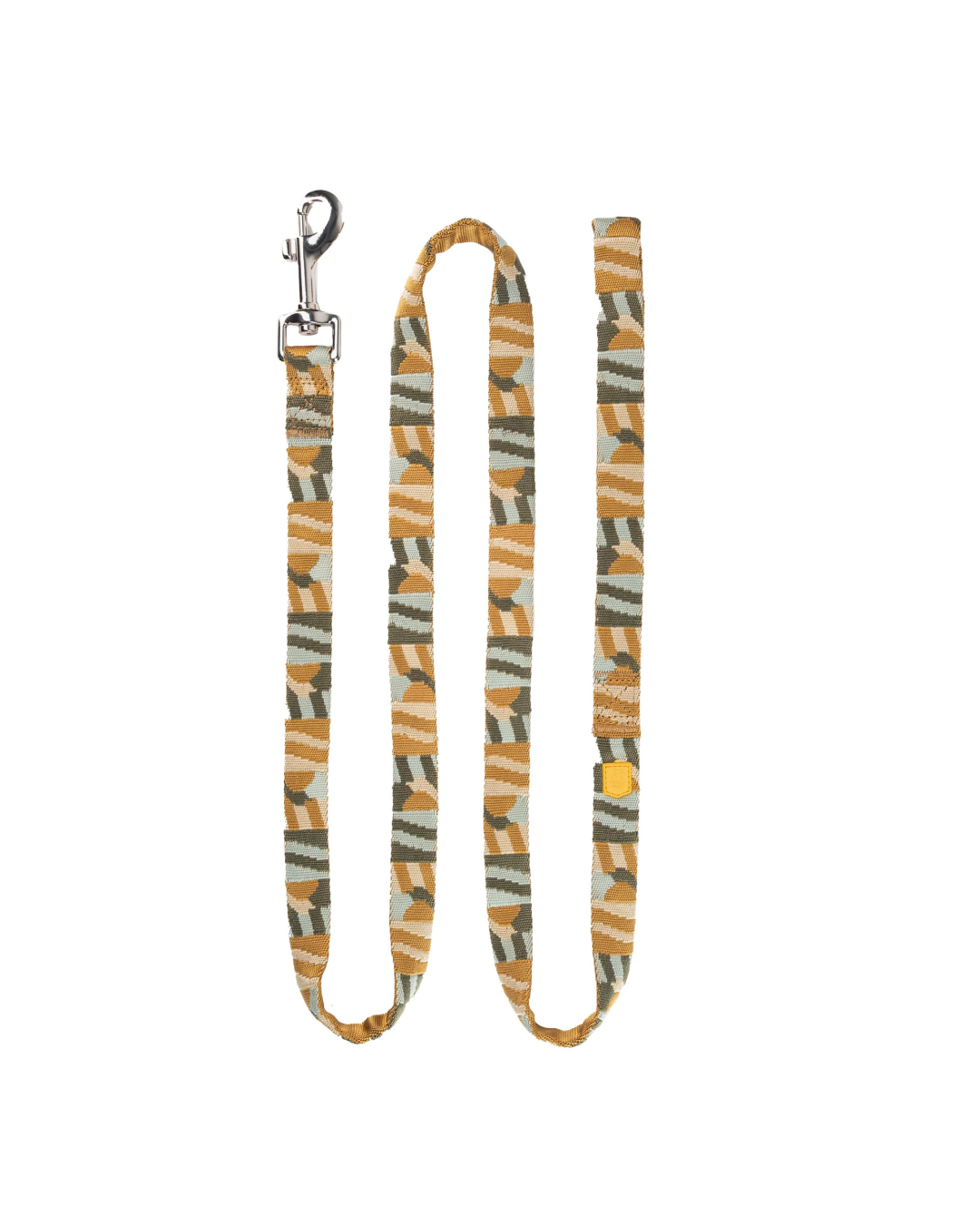
For the dog whose walking gear should look as good as it works: the Woolly Wolf range of collars and leads, made from recycled PET bottles, in colourways like Northern Lights, Roam Terracotta Ripple, and Cloudbeam. Walking gear that looks good and does some good on the way.
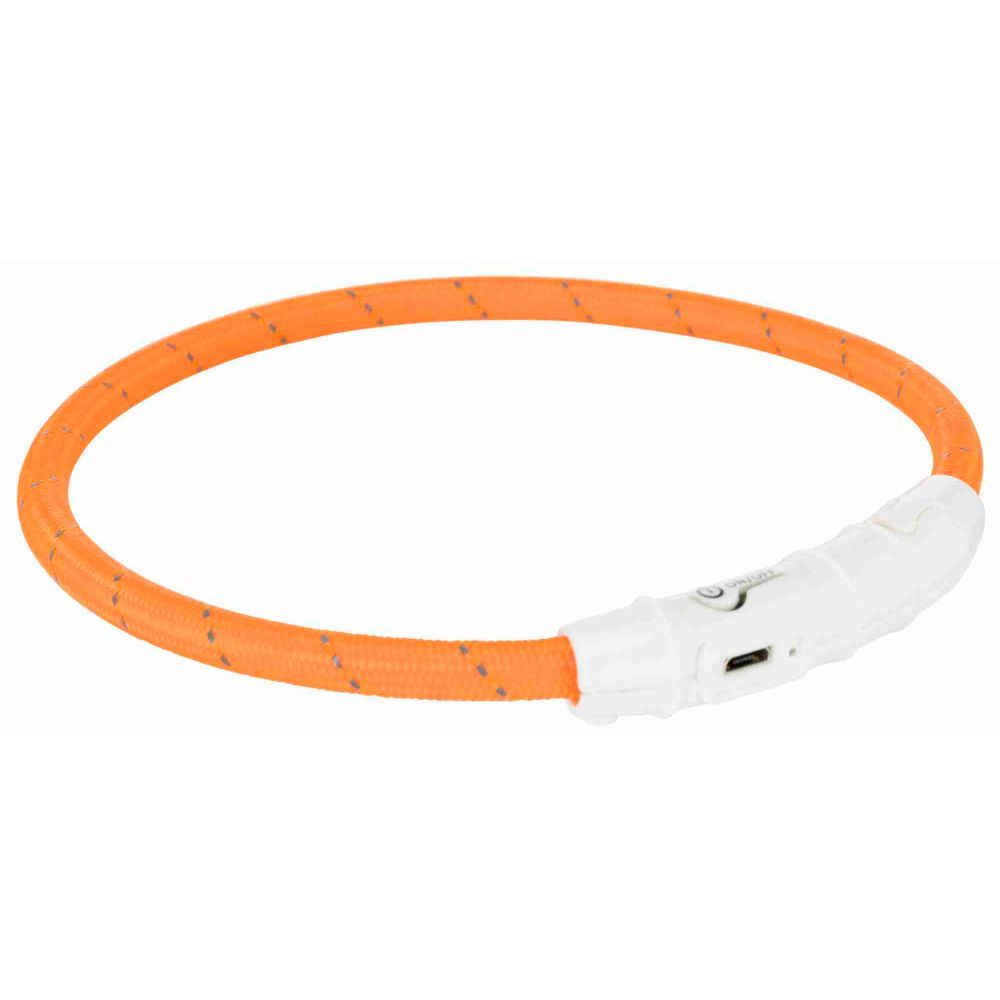
And for the darker months — which in Ireland is most of the year — a Trixie Flash Light Ring clipped onto the collar keeps both dog and owner visible on evening walks. Available in small/medium and large/extra-large, USB rechargeable. Not decoration — genuine visibility on a dark road.
The Real Answer
There’s no single correct number of minutes. Size gives you a starting range. Breed purpose — what the dog was actually bred to do — refines it considerably, sometimes in the opposite direction the size chart suggests. And varying where and how you walk matters as much as how long you walk for.
Look up your own dog’s specific breed background rather than working backwards from its weight. If it’s a cross, look at the dominant traits. If you’re still not sure, a vet will give you a straighter answer than another chart.
We stock the walking gear mentioned above with next-day delivery nationwide, no need to track down a specialist store in person.
Useful links:
If you want more info on different breeds check out the below links.